| b |
SIFPSA Goes Hi-Tech
Creativity at SIFPSA is not restricted to
its strategy alone. The programme management is also innovative.
This was evident on 5 September 2003 when SIFPSA management and
staff from its 38 PMUs, implementing decentralized RCH plans, came
face to face, for the first time, in a spectacular session of video
conferencing. At the flick of a switch, the 38 districts spanning
the entire state, were linked up with Lucknow for an interactive
review, feedback and information sharing 'meeting' !
SIFPSA accessed National Informatic Centre’s high speed satellite
based network called NICNET to obtain full motion video transmission
connecting the conference facility at Lucknow with centres in districts.
This enabled participants to interact, broadcast, share & collaborate
seamlessly. Inspite of a storm, heavy rains and power failure in
many districts of east UP, the connectivity, image quality and reception
was of excellent quality. Video conferencing also saved the hassles
involved in officers traveling to Lucknow from the field for themonthly
meeting.
| |
|
| G |
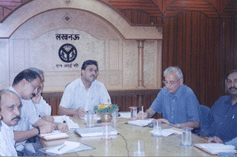
Mr.
J. S. Deepak, Executive Director, SIFPSA & General Managers,
in a Video conferencing session |
Reviewing
Performance
The video conferencing began with a welcome by the Executive Director
to the larger SIFPSA family spread across the state. The ground
rules were laid down and the review began in right earnest. The
sterilization performance was discussed and the districts updated
the status on RCH camps and efforts being made to bring CHCs and
block PHCs to readiness for the on coming, post- monsoon, busy season.
 |
|
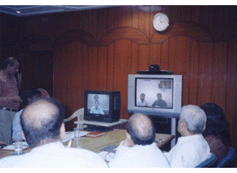
Feedback
and information sharing using video links |
O |
Ensuring quick solutions
The statewide routine immunization project, which commenced on 1
September, 2003 was discussed in depth. A brief presentation was
made by GM (Public Sector). PMUs pointed out various difficulties
being faced in the implementation by CMOs and sought clarifications.
Problems being faced in hiring vehicles to transport ANMs were raised
by a number of districts. Many issues were resolved on the basis
of experience of those PMUs which had been able to fix them locally
and shared their strategies. A number of decisions were taken on
the spot by the Executive Director thereby short circuiting the
need for lengthy correspondence and paper work. These included relaxing
procedure for hiring vehicles and authorizing a simpler system for
their repairs.
Activities related to private sector, marketing, training, and housekeeping
were also discussed. The IEC division used this occasion to obtain
the opinions of PMs on what they thought were major hurdles to sterilization
acceptance. This feedback will be used in the design of the statewide
sterlization campaign which is proposed to be launched in November
2003 .
The PMs were really excited at this new opportunity for interacting
face to face with the Executive Director , GMs and programme staff
at SIFPSA. In view of the enthusiasm and the unanimous feeling that
video conferencing was a viable substitute for meetings, it has
been decided to have it on a regular basis, and in future, also
involve CMOs and DMs.
SIFPSA, in days to come will be in regular touch with its field
formations in the districts using this efficient and cost effective
medium. It is also planned to use video conferencing for orientation
of project managers and field functionaries in new interventions
and activities. Interactive training sessions with large networks
like pradhans and anganwadi workers are also planned.
|
d |