|
Reaching Out with Chetna
Fairs or melas attract large crowds and provide a unique opportunity
to generate awareness in remote rural areas. They are also extremely
popular for family outings and entertainment. If services can be
provided at melas their acceptability automatically increases.
SIFPSA organized chetna, a series of 120 health melas in Gonda and
Shahjahanpur districts of UP during January-March, 2003. A three
pronged approach was chosen :
1. swasthya samridhi mela at the village level
2. wall paintings in mela villages
3. repeat visits through van shows
| |
 |
| G |
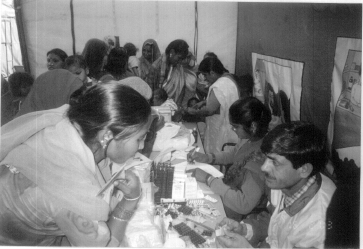
Client-provider
interaction at swasth nari camp |
The
Mela
This
was a day-long activity in the village and ended with a film show
in the evening. Advance publicity of the event was done on the preceding
day in the event-village and two nearby villages by making announcements
on loudspeakers and through banners at retail outlets and by distributing
invitations and coupons for a lucky draw. Medical officers of the
neighbouring PHC, ANMs and anganwadi workers participated in the
inauguration of the mela which was usually done by the pradhan or
a village influential.
The services provided in the mela included antenatal check-up of
pregnant women, TT immunization and distribution of IFA tablets
at the swasth nari camps. There was entertainment as well, which
included attractions like lucky draw, wheel of fortune and quiz
on public health issues. Often large crowds were present to avail
services.
The men were not left out either. At the samajhdar purush camps
a magician was used to speak about modern contraception. Games were
also used to convey the fact that vasectomy did not affect masculinity.
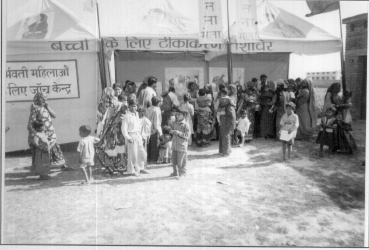
The teekakaran camp provided immunization services to children.
The mela concluded with an exclusive lucky draw and a block buster
film projected on a large screen. The film was interspersed with
SIFPSA TV spots on spacing methods and raising age at marriage.
 |
|
Immunization
stall attracting mothers & children |
L |
Reminder
& Follow-up
The wall paintings in the event village and the two satellite villages
served as a reminder to the villagers of the ‘chetna’
or awakening that was brought on family planning issues by the event.
A mobile van conducted a repeat visit to the event village after
two months of the mela activity. The repeat visit served the purpose
of distribution of contraceptives, follow up interaction with clients,
ANMs and anganwadi workers to collect feedback.
Lessons Learned
Piloting this activity has resulted in some very useful lessons
learned :
1. Services provided at the door step are more readily availed by
the beneficiaries.
2. By integration of the mela with service delivery sites providing
a complete range of RCH services the effect of the intervention
can be further enhanced.
3. Cost sharing among different agencies marketing products in rural
areas could make this activity sustainable. |